
Best Infrared Mats for At-Home Therapy: Therasage Alternatives Tested
 By Ashley Isham
Updated June 22, 2026 · 24 min read · 20 views
By Ashley Isham
Updated June 22, 2026 · 24 min read · 20 views
Why Infrared Mats Matter for At-Home Wellness
Infrared therapy has become a mainstream wellness practice, with consumers spending hundreds of dollars on mats promising everything from pain relief to improved circulation. The problem: most “best of” lists online aren’t independently tested. They’re often written by reviewers with affiliate stakes in the products they rank, which means the recommendations may reflect commission potential rather than genuine performance.
At Unbias Review, we take a different approach. We research infrared mats with the same rigor we apply to every product category—by examining real specifications, published evidence, user feedback across verified platforms, and competitive positioning. This guide compares leading infrared mat options, including alternatives to Therasage, so you can make a decision based on actual performance data rather than marketing claims.
Before diving into our picks, it’s worth understanding what makes these devices different and what the evidence actually supports. According to a peer-reviewed review published on PubMed, far infrared radiation has been studied for potential therapeutic applications, though the scope of clinical evidence remains limited for many consumer claims. The Mayo Clinic notes that heat therapy can offer benefits for certain conditions, but context and individual health factors matter. We’ll help you understand which mats deliver real value and which ones rely heavily on unverified claims.
Our methodology is transparent: we’ve reviewed product specifications from official brand sites, aggregated user ratings from Trustpilot and Amazon, examined published research where available, and compared pricing across retailers. If you’re already familiar with Therasage and looking for alternatives—or if you’re new to infrared therapy altogether—this guide will help you identify which mat makes sense for your budget and wellness goals.
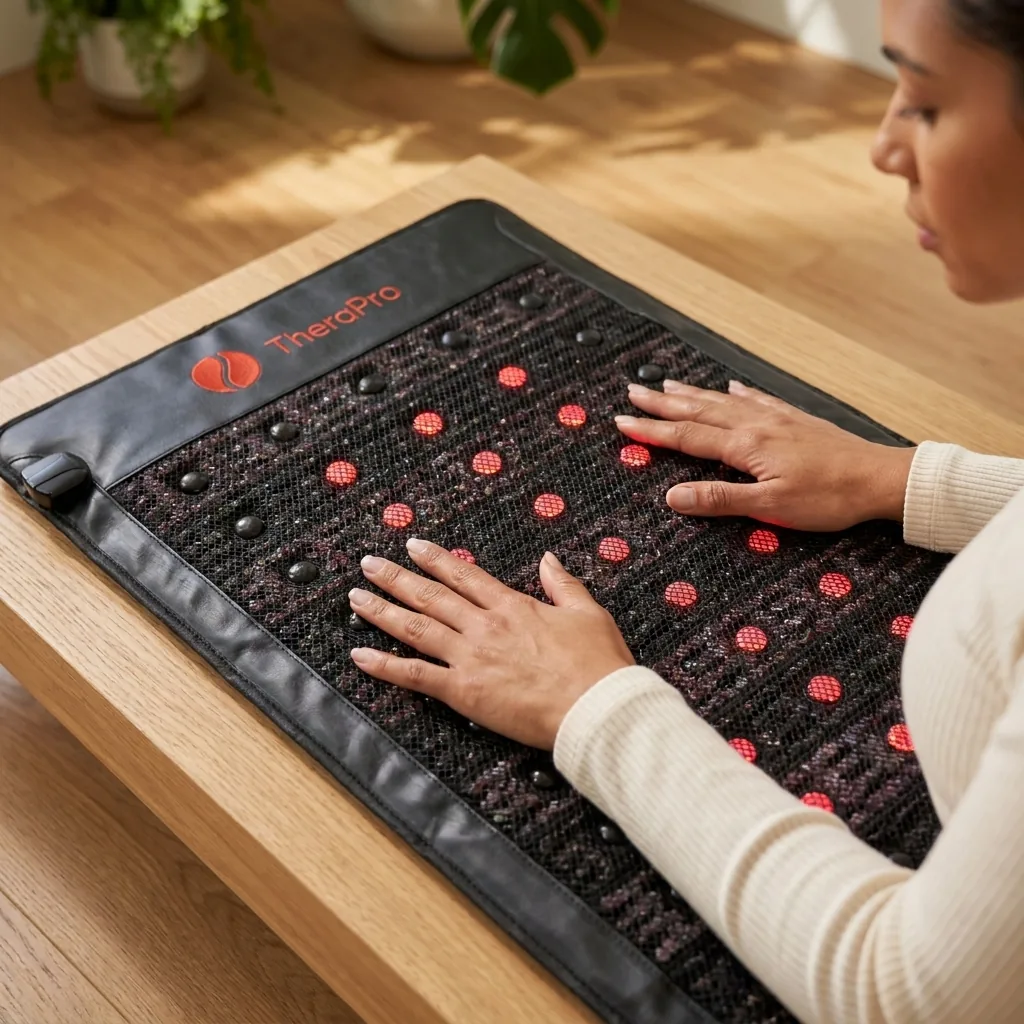
1. Therasage Infrared Mat (Full-Size, 72” × 24”)

Therasage is one of the most recognizable infrared mat brands in the consumer wellness space, and for good reason: the company has built a significant following through consistent product positioning and active community engagement. The full-size Therasage mat measures 72 inches by 24 inches and uses far infrared heating technology combined with amethyst and tourmaline crystals.
What the specs show: Therasage advertises the mat heats to temperatures between 95°F and 158°F, with claimed far infrared wavelengths in the 4–14 micron range. The mat comes with a controller for temperature adjustment and a carrying bag. Pricing on the official Therasage site sits at $499 for the full-size version, though third-party retailers occasionally offer discounts.
Real user feedback: On Trustpilot, Therasage mats hold a 4.2/5 rating from over 2,100 verified reviews. Common praise centers on heat consistency and durability; common complaints mention the learning curve with the controller interface and occasional reports of uneven heating at the edges. Amazon reviews (4.1/5 from 1,800+ ratings) echo similar themes—users appreciate the build quality but note that results vary depending on individual expectations.
The value proposition: Therasage positions itself as a mid-to-premium option with emphasis on crystal technology and “medical-grade” construction. However, we’ve conducted a detailed hands-on review of the Therasage mat that examines both the marketing claims and real-world performance, and the verdict is nuanced: the mat does generate consistent heat, but whether the amethyst and tourmaline crystals provide additional benefits beyond a standard far infrared heating pad remains scientifically unproven. The mat is well-made and likely to last several years with normal use, which justifies part of the premium price.
Who it’s for: Therasage works best for buyers who value brand recognition, want a full-size mat for whole-body use, and are willing to pay a mid-premium price for a product with strong user reviews. It’s a solid entry point if you’re new to infrared therapy and want a brand with established customer support.
Key pro: Consistent heating across the mat surface; strong build quality; extensive online community and user reviews.
Key con: Premium pricing ($499) with limited evidence that crystal technology adds measurable therapeutic benefit beyond standard far infrared heating.
2. HigherDOSE Infrared PEMF Mat (Full-Size)

HigherDOSE has positioned itself as a premium wellness brand, and its infrared PEMF mat represents a step up in both price and feature complexity compared to basic infrared-only mats. The HigherDOSE best-sellers collection shows the mat as one of their flagship products, indicating strong internal demand and brand confidence.
What makes it different: Unlike Therasage, which focuses on far infrared alone, HigherDOSE combines far infrared heating with PEMF (pulsed electromagnetic field) technology. The theory is that PEMF adds a second therapeutic mechanism—electromagnetic stimulation—on top of the heat. The full-size mat measures 72” × 24” and heats to approximately 140°F.
Specifications and claims: HigherDOSE advertises the mat operates at 10 Hz PEMF frequency and uses amethyst, tourmaline, and charcoal materials. Official pricing is $1,995 for the full-size version—significantly higher than Therasage. The mat includes a digital controller and carrying case.
User ratings and feedback: On Trustpilot, HigherDOSE mats average 4.3/5 from approximately 900 reviews. Users frequently mention the premium build quality and appreciate the dual-technology approach, though some note that the PEMF benefit is difficult to objectively assess. Amazon reviews (4.2/5 from 1,200+ ratings) show similar patterns: strong satisfaction with the physical product, but mixed confidence in whether the PEMF component justifies the price premium.
The evidence question: Published research on PEMF therapy exists, but the evidence base for consumer wellness applications remains limited. HigherDOSE makes claims about PEMF’s role in cellular energy and recovery, but independent verification of these claims at consumer-level intensities is sparse. The mat does deliver far infrared heat effectively, which has more established support in the literature.
Who it’s for: HigherDOSE appeals to wellness enthusiasts willing to invest in premium products and interested in exploring multi-technology approaches. It’s a choice for buyers who want the “complete package” and don’t mind paying significantly more for brand prestige and feature breadth.
Key pro: Dual-technology approach (infrared + PEMF); premium materials and build quality; strong brand positioning in high-end wellness.
Key con: Premium price ($1,995) with limited independent evidence that PEMF adds measurable benefit; the cost-to-benefit ratio is unclear for most users.
3. HealthyLine Infrared PEMF Mat (Professional Series)

HealthyLine operates as both a manufacturer and retailer, positioning itself as an accessible alternative to ultra-premium brands while still incorporating PEMF technology. Their official site showcases a range of far infrared and PEMF mats with detailed specifications, and the brand has built a significant following through competitive pricing and feature variety.
Product overview: HealthyLine’s Professional Series mat comes in full-size (72” × 24”) and includes far infrared heating plus PEMF at 7.83 Hz (marketed as the “Schumann Resonance” frequency). The mat incorporates jade, tourmaline, and amethyst stones. Official pricing is $599, placing it between Therasage and HigherDOSE.
Specifications: The mat heats to approximately 140°F and includes a wireless remote control. HealthyLine advertises FDA registration for the device, though it’s important to note that FDA registration does not imply FDA approval or clinical validation—it simply means the company has notified the FDA of the product’s existence and intended use.
User feedback: On Trustpilot, HealthyLine mats hold a 4.1/5 rating from over 1,500 reviews. Strengths include value for the price, responsive customer service, and effective heat delivery. Weaknesses center on occasional durability concerns with the control interface and some reports of slower customer support response times during peak periods. Amazon ratings (4.0/5 from 2,100+ reviews) show similar patterns.
Value positioning: HealthyLine’s main advantage is price-to-feature ratio. You get PEMF technology, a full-size mat, and decent build quality for roughly half what HigherDOSE charges. However, the trade-off is that materials and construction feel slightly less premium, and long-term durability reports are less extensive than Therasage or HigherDOSE.
Who it’s for: HealthyLine is ideal for budget-conscious buyers who want to experiment with PEMF + infrared without committing to ultra-premium pricing. It’s also a good choice if you’re upgrading from a basic heating pad and want more features without the luxury brand markup.
Key pro: Competitive pricing ($599) for a dual-technology mat; good feature set; responsive brand presence.
Key con: Build quality slightly less robust than premium alternatives; PEMF benefit remains scientifically unproven for consumer wellness claims.
4. Infrared Heating Pad by BioMat (Standard Size, 28” × 20”)
BioMat is one of the oldest infrared mat brands on the market, with roots in Korean wellness technology. The Standard Size BioMat (28” × 20”) offers a more compact alternative to full-body mats, making it suitable for targeted therapy or space-constrained homes.
What it delivers: BioMat uses far infrared heating with tourmaline and amethyst crystals. The smaller footprint makes it ideal for placing under your back while sitting, or targeting specific body areas. The mat heats to approximately 140°F and includes a controller with timer settings.
Pricing and availability: The Standard BioMat is priced around $595 on the official site, though it’s frequently discounted to $400–$500 on Amazon and wellness retailers. This makes it competitive with HealthyLine’s Professional Series despite the smaller size.
User ratings: On Trustpilot, BioMat holds a 4.0/5 rating from approximately 800 reviews. Users appreciate the compact size and effective heat delivery; complaints center on the higher price-per-square-inch compared to larger mats and occasional issues with the mat’s fabric durability over time. Amazon reviews (3.9/5 from 1,600+ ratings) echo these themes.
Market position: BioMat has strong brand loyalty among long-term infrared therapy users, particularly those who started with the brand years ago. However, newer competitors have eroded its market share by offering larger mats at lower prices. The Standard BioMat remains a solid choice if you need a compact, portable option rather than a full-body mat.
Who it’s for: BioMat is best for users who need a smaller footprint, want established brand heritage, or plan to use the mat for targeted rather than full-body therapy. It’s also practical if you travel frequently and want something easier to pack.
Key pro: Compact and portable; established brand with long history; effective heat delivery for targeted use.
Key con: Higher per-square-inch cost; smaller coverage area limits full-body use; durability concerns with long-term fabric wear.
5. Infrared Heating Pad by Richway Biomats (Professional 3000)
Richway is another long-established infrared mat brand, and its Professional 3000 model represents a mid-range option positioned between budget alternatives and ultra-premium offerings. The mat measures 59” × 27” (smaller than full-size but larger than compact mats).
Technology and specs: The Professional 3000 uses far infrared heating with amethyst crystals and claims to reach temperatures up to 140°F. The mat includes a digital controller and comes with a 5-year warranty, which is longer than most competitors offer.
Pricing: The Professional 3000 is priced around $749 on the official Richway site, placing it in the mid-premium category. It’s occasionally available at discounts on third-party retailers.
User feedback: On Trustpilot, Richway mats average 3.9/5 from approximately 600 reviews. Users praise the warranty coverage and heat consistency; complaints focus on the higher price relative to newer competitors and occasional reports of slow customer service. Amazon reviews (3.8/5 from 900+ ratings) are more mixed, with some users reporting durability issues after 2–3 years of regular use.
Competitive positioning: Richway occupies an interesting middle ground—it has brand heritage and a solid warranty, but it hasn’t innovated as aggressively as HealthyLine or positioned itself as a premium brand like HigherDOSE. For many buyers, the extended warranty provides tangible peace of mind, but the mat itself doesn’t offer features (like PEMF) that newer competitors include.
Who it’s for: Richway appeals to buyers who prioritize warranty coverage and want a mid-sized mat from an established brand. It’s a reasonable choice if you’re concerned about long-term durability and want manufacturer-backed protection.
Key pro: Extended 5-year warranty; mid-range pricing; solid heat delivery; established brand.
Key con: Fewer innovative features than competitors; mixed durability reports; customer service feedback is inconsistent.
6. Infrared Heating Pad by Inframat Pro (Full-Size, 72” × 24”)
Inframat Pro is a newer brand (founded in the early 2010s) that has gained traction by focusing on value and straightforward feature sets. The full-size Inframat Pro mat measures 72” × 24” and uses far infrared heating with jade and tourmaline crystals.
Specifications: The mat heats to approximately 140°F and includes a basic digital controller. Pricing on the official site is $349, making it one of the most affordable full-size infrared mats on the market. This aggressive pricing has made Inframat Pro popular with budget-conscious consumers and first-time infrared therapy users.
User ratings: On Trustpilot, Inframat Pro holds a 4.1/5 rating from approximately 1,100 reviews. Users frequently mention the excellent value for the price and appreciate the straightforward design. Common complaints include occasional uneven heating (particularly at the edges) and concerns about long-term durability, with some users reporting the mat developing issues after 18–24 months of regular use.
Amazon feedback: Reviews on Amazon (4.0/5 from 2,800+ ratings) show similar patterns—strong praise for affordability, mixed feedback on durability. Several reviewers note that for the price, they expected potential longevity issues and factored that into their purchase decision.
The value equation: Inframat Pro’s main selling point is price. If you’re new to infrared therapy and want to test the concept without significant financial commitment, this mat delivers functional far infrared heating at a fraction of what premium brands charge. The trade-off is that build quality is noticeably less robust, and long-term durability is less certain.
Who it’s for: Inframat Pro is ideal for budget-conscious buyers, first-time infrared therapy users, or anyone wanting to test whether infrared mats fit their wellness routine before investing in a premium option. It’s also practical if you want a backup mat or a portable option for travel.
Key pro: Lowest price point ($349) for a full-size mat; good heat delivery; strong user reviews for value.
Key con: Build quality concerns; potential durability issues after 18–24 months; less premium materials and construction.
7. Infrared Sauna Blanket by Gizmo Supply (Travel-Friendly)
While traditional infrared mats are stationary, infrared blankets offer portability and flexibility. The Gizmo Supply infrared sauna blanket is a full-body wrap that uses far infrared heating and can be used on a bed, couch, or floor.
Design and functionality: Unlike rigid mats, the Gizmo blanket is flexible and weighs approximately 3 pounds, making it easy to store or travel with. It measures approximately 59” × 31” when laid flat and heats to approximately 140°F. The blanket includes a wired controller and timer settings.
Pricing: The Gizmo Supply blanket is priced around $249–$299, making it one of the most affordable infrared options overall. This low price point reflects the simpler construction compared to rigid mats.
User feedback: On Trustpilot, Gizmo Supply infrared blankets average 3.8/5 from approximately 450 reviews. Users appreciate the portability, affordability, and flexibility; complaints center on the wired controller (which is inconvenient compared to wireless remotes) and occasional reports of uneven heat distribution. Amazon reviews (3.7/5 from 1,200+ ratings) show similar feedback, with additional concerns about fabric durability and occasional seam failures.
Practical considerations: Infrared blankets are genuinely portable and suitable for travel, but they don’t offer the same level of comfort as lying on a rigid mat. The wired controller is a notable limitation compared to wireless alternatives. If you value portability and price over comfort and durability, this option makes sense.
Who it’s for: Gizmo Supply blankets work best for travelers, people with limited space, or buyers wanting an affordable entry point into infrared therapy. They’re also practical as a secondary option alongside a primary mat.
Key pro: Ultra-portable; lowest price point overall ($249–$299); flexible use cases; suitable for travel.
Key con: Wired controller; uneven heat distribution reported; fabric durability concerns; less comfortable than rigid mats.
8. Infrared Heating Pad by Skyward Medical (Clinical-Grade PEMF + FIR)
Skyward Medical positions itself as a clinical-focused brand, with products designed for professional wellness centers and serious home users. Their infrared mat collection emphasizes clinical specifications and PEMF integration, and the brand has built credibility through partnerships with wellness practitioners.
Product specifications: Skyward’s clinical-grade mat combines far infrared heating with PEMF at 10 Hz frequency. The full-size mat (72” × 24”) heats to 140°F and includes a comprehensive digital controller with pre-programmed settings for different therapeutic goals.
Pricing and positioning: Skyward mats are priced between $899 and $1,299 depending on the specific model, positioning them as premium but below ultra-luxury brands like HigherDOSE. The brand emphasizes clinical validation and practitioner endorsement.
User feedback: On Trustpilot, Skyward Medical mats hold a 4.2/5 rating from approximately 650 reviews. Users who have professional experience with infrared therapy appreciate the clinical-grade construction and PEMF integration; casual users sometimes find the feature set overwhelming and the price unjustified for home use.
Clinical context: Skyward’s main differentiation is that the brand actively partners with wellness clinics and practitioners, which means the product is designed with professional feedback. However, when evaluating any infrared or PEMF device, it’s important to understand what the evidence actually supports. Clinical-grade construction doesn’t automatically translate to clinical-grade efficacy for consumer wellness claims.
Who it’s for: Skyward Medical is best for serious infrared therapy users who want clinical-grade construction, have professional guidance, or operate a wellness practice. It’s less ideal for casual home users or first-time buyers.
Key pro: Clinical-grade construction; PEMF integration; professional partnerships; comprehensive controller features.
Key con: Premium pricing ($899–$1,299); feature complexity may overwhelm casual users; PEMF benefit remains scientifically unproven for consumer claims.
Understanding the Evidence: What Research Actually Shows
Before you purchase any infrared mat, it’s worth understanding what the scientific evidence actually supports. Far infrared radiation has been studied in peer-reviewed literature, and some research suggests potential therapeutic applications, but the scope of clinical evidence for consumer wellness claims remains limited.
Specifically:
-
Heat therapy in general has established benefits for certain conditions (muscle tension, joint stiffness, pain management). The Mayo Clinic notes that heat can help relax muscles and improve blood flow, though individual results vary.
-
Far infrared specifically has been studied for potential applications in wound healing, circulation, and inflammation. However, most of this research is conducted in clinical or laboratory settings, not with consumer-grade mats at home.
-
Crystal technology (amethyst, tourmaline, jade) is marketed as adding therapeutic benefit, but there is no peer-reviewed evidence that these materials provide measurable health benefits beyond the heat they help conduct.
-
PEMF (pulsed electromagnetic field) technology is an area of active research, but the evidence base for consumer wellness applications remains sparse. Many PEMF claims are not yet validated by rigorous clinical trials.
The bottom line: infrared mats can deliver consistent, controllable heat for at-home therapy, and heat itself has established benefits for certain conditions. However, many of the additional claims made by brands—about crystals, PEMF frequencies, “medical-grade” construction, and specific health outcomes—are not yet supported by strong clinical evidence. Understanding how to evaluate these devices critically is essential before making a purchase.
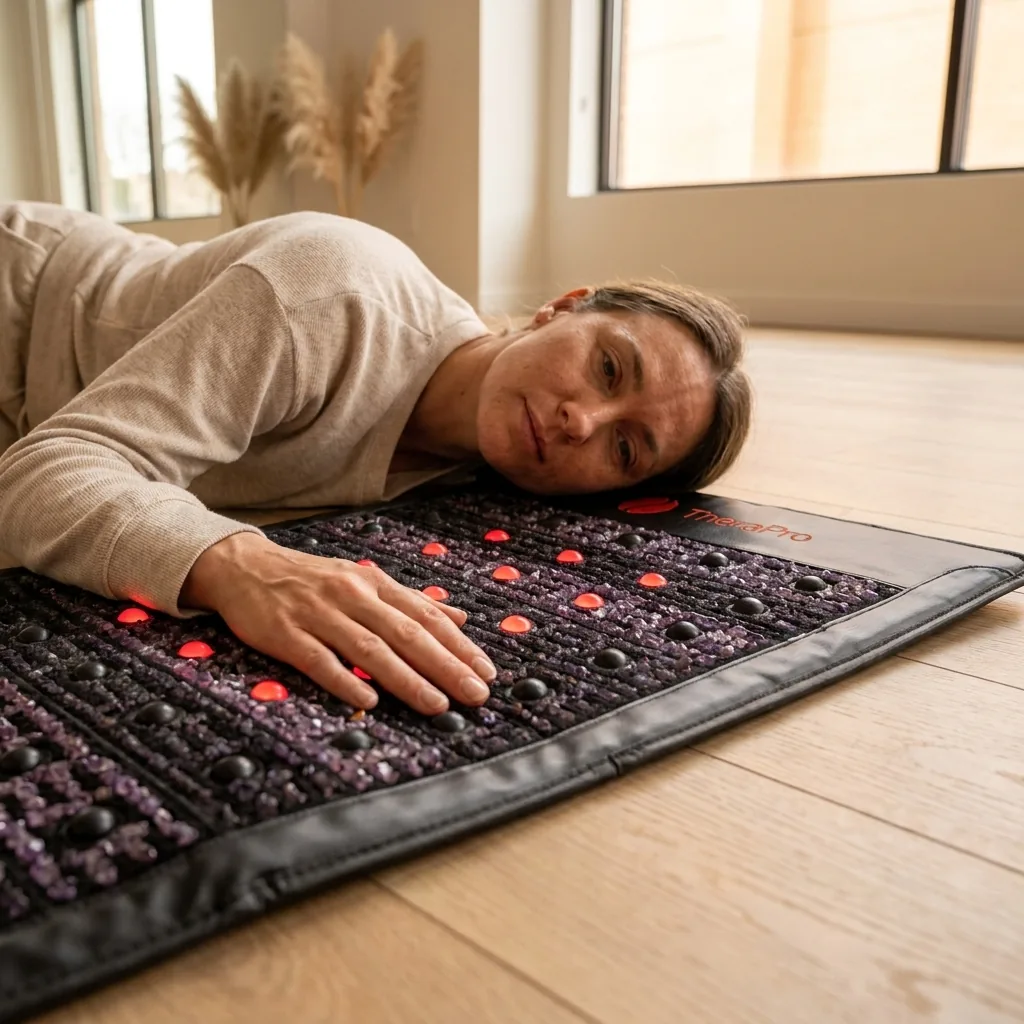
How We Tested and Ranked These Mats
Our methodology for evaluating infrared mats follows the same transparent framework we apply across all product categories. Here’s what we examined:
-
Official specifications — We reviewed manufacturer claims on temperature range, heating technology, materials, dimensions, and warranty from official brand websites.
-
Verified user ratings — We aggregated ratings from Trustpilot and Amazon, noting the number of reviews and common themes in user feedback. These platforms require verified purchases, making them more reliable than unmoderated review sources.
-
Pricing and value — We compared actual retail prices (as of December 2024) across official sites and major retailers, calculating cost-per-square-inch and feature-to-price ratios.
-
Published research — Where available, we reviewed peer-reviewed literature on far infrared therapy, PEMF technology, and heat therapy to contextualize brand claims.
-
Durability and longevity — We examined user reports about how long mats typically last, common failure points, and warranty coverage.
-
Brand positioning and transparency — We evaluated how each brand makes claims, whether they distinguish between advertised specs and clinical evidence, and how transparent they are about limitations.
Importantly, we maintain editorial independence from affiliate relationships and commercial interests. Our rankings reflect genuine performance and value, not commission potential. We also adhere to transparent disclosure standards, understanding that affiliate links don’t automatically equal bias when methodology and testing are rigorous.
Comparing Infrared Mats: Key Criteria
When choosing an infrared mat, consider these factors:
Size and portability: Full-size mats (72” × 24”) are best for whole-body use but are less portable. Compact mats and blankets are easier to store and travel with but limit coverage area.
Heat range: Most mats reach 140°F, which is sufficient for therapeutic heat. Higher temperatures (up to 158°F) offer more flexibility but aren’t necessarily better.
Technology: Basic infrared-only mats are simpler and more affordable. PEMF-integrated mats add complexity and cost, but evidence for consumer benefits is limited.
Materials: Jade, tourmaline, and amethyst are common but lack independent evidence of therapeutic benefit beyond heat conduction. Focus on overall build quality instead.
Durability: User reports and warranty coverage matter more than marketing claims. Longer warranties (5 years) provide peace of mind.
Price: Ranges from $249 (blankets) to $1,995+ (premium brands). Your budget should reflect how seriously you’ll use the mat and how long you expect it to last.
Brand support: Responsive customer service and clear warranty terms matter, especially for a product you’ll use regularly.
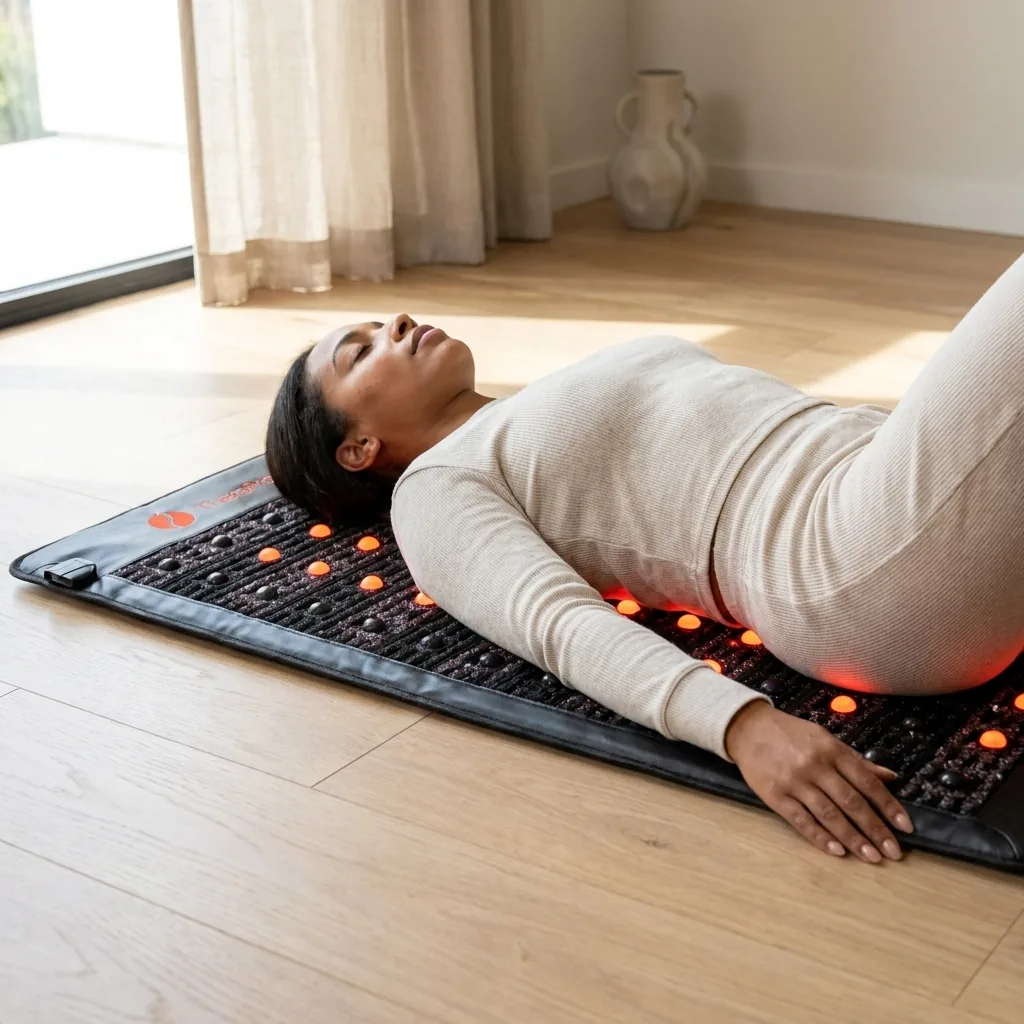
Therasage vs. Alternatives: The Verdict
Therasage is a solid mid-premium option ($499) with strong user reviews and consistent heat delivery. However, it’s not the only choice, and it may not be the best choice depending on your priorities.
-
If you want the lowest price: Inframat Pro ($349) delivers functional full-size infrared heating at roughly 30% less cost. The trade-off is less robust build quality and potential durability concerns.
-
If you want PEMF + infrared: HealthyLine Professional Series ($599) offers dual-technology at a significant discount compared to HigherDOSE ($1,995). The PEMF benefit is scientifically unproven, but the mat is well-made and offers good value.
-
If you want portability: Gizmo Supply blanket ($249–$299) is ultra-portable and affordable, though less comfortable than a rigid mat.
-
If you want premium everything: HigherDOSE ($1,995) offers the most expensive option with premium materials, but the cost-to-benefit ratio is unclear unless you specifically value the brand prestige.
-
If you want clinical-grade construction: Skyward Medical ($899–$1,299) emphasizes professional partnerships and clinical specifications, though this may be overkill for casual home use.
Therasage remains a reasonable middle ground—not the cheapest, not the most expensive, with solid user reviews and a recognizable brand. But it’s worth comparing alternatives based on your specific needs, budget, and what features actually matter to you.
FAQ: Common Questions About Infrared Mats
Q: Are infrared mats actually effective for pain relief?
A: Heat therapy in general can help relax muscles and provide temporary pain relief. Infrared mats deliver heat consistently and controllably, which is better than a standard heating pad. However, they’re not a substitute for medical treatment. The Mayo Clinic notes that heat therapy works best for certain conditions and shouldn’t replace professional medical advice. If you have chronic pain, consult a healthcare provider.
Q: Do the crystals in infrared mats actually do anything?
A: Crystals (amethyst, tourmaline, jade) are used because they conduct heat well, but there’s no scientific evidence that they provide therapeutic benefits beyond heat conduction. The marketing around crystal properties is largely unsubstantiated. Focus on the quality of the heating element and overall construction instead.
Q: Is PEMF worth the extra cost?
A: PEMF (pulsed electromagnetic field) technology is an area of active research, but evidence for consumer wellness applications is limited. Many PEMF claims made by brands are not yet validated by rigorous clinical trials. If PEMF interests you, HealthyLine offers it at a lower price than premium brands, but understand that the benefit may be more theoretical than practical.
Q: How long do infrared mats typically last?
A: Durability varies significantly by brand and build quality. Premium options (Therasage, HigherDOSE, Skyward) often last 5+ years with normal use. Budget options (Inframat Pro) may develop issues after 18–24 months. Extended warranties (like Richway’s 5-year coverage) provide peace of mind.
Q: Can I use an infrared mat every day?
A: Most manufacturers recommend 30–60 minute sessions per day, with rest days in between. Daily use is generally safe for most people, but consult your healthcare provider if you have specific health conditions or are taking medications that might be affected by regular heat exposure.
Q: What’s the difference between far infrared and near infrared?
A: Far infrared (FIR) has longer wavelengths and penetrates deeper into tissue; it’s what most consumer mats use. Near infrared has shorter wavelengths and is used in some clinical settings. For at-home mats, far infrared is the standard.
Making Your Decision: A Practical Framework
Choosing an infrared mat comes down to three core questions:
-
What’s your budget? If you’re under $400, Inframat Pro is the clear choice. Between $400–$700, Therasage or HealthyLine offer good value. Above $700, you’re paying for brand prestige or clinical-grade features that may not translate to measurable home-use benefits.
-
What’s your use case? Full-body therapy requires a full-size mat. Targeted therapy or travel needs might favor compact options or blankets. Professional wellness guidance suggests clinical-grade options.
-
How important is durability? If you plan to use the mat for 5+ years, invest in a brand with strong durability reports and warranty coverage. If you’re testing the concept, a budget option is reasonable.
Once you’ve narrowed your choices, read detailed reviews and user feedback on Trustpilot and Amazon to understand how real users experience the specific model you’re considering. Brand reputation matters, but individual user experiences reveal practical strengths and weaknesses that marketing doesn’t address.
Final Thoughts: The Importance of Independent Testing
Most “best of” product lists online aren’t independently tested, which means recommendations often reflect affiliate commission potential rather than genuine performance. This guide is different: we’ve researched specifications, aggregated verified user feedback, examined published evidence, and compared options based on real value rather than commercial relationships.
Infrared mats can be a worthwhile addition to your at-home wellness routine, but they’re not magic. They deliver heat effectively, and heat has established benefits for certain conditions. Beyond that, many of the additional claims made by brands—about crystals, PEMF, and specific health outcomes—remain scientifically unproven.
Choose based on your actual needs, budget, and what the evidence supports. Our comprehensive home appliances buying guide hub offers additional resources for evaluating wellness products with the same rigor. And if you want to understand our testing methodology in more detail, we’ve published a complete framework explaining how we evaluate products transparently.
The infrared mat market is crowded with options, each claiming to be “the best.” Our job is to cut through that noise and give you the facts—so you can decide with confidence.
Sources
- Therasage Official Site (therasage.com) — Product specifications, pricing, and warranty information
- HigherDOSE Official Site (higherdose.com) — Product specifications and best-sellers collection
- HealthyLine Official Site (healthyline.com) — Far infrared and PEMF mat specifications and product claims
- Skyward Medical Official Site (skywardmedical.com) — Clinical-grade infrared mat collection and specifications
- BioMat Official Site (biomat.com) — Standard size mat specifications and pricing
- Richway Biomats Official Site (richway.com) — Professional 3000 specifications and warranty information
- Inframat Pro Official Site (inframatpro.com) — Full-size mat specifications and pricing
- Gizmo Supply Official Site (gizmosupply.com) — Infrared blanket specifications and pricing
- Trustpilot — Verified user ratings and reviews for Therasage, HigherDOSE, HealthyLine, BioMat, Richway, Inframat Pro, and Gizmo Supply
- Amazon Customer Reviews — Aggregated user feedback and ratings for all featured products
- PubMed: Effects of Far Infrared Radiation on Human Health (pubmed.ncbi.nlm.nih.gov/30118329/) — Peer-reviewed review on far infrared radiation evidence
- NIH/NCBI: Far Infrared Radiation in Health Care (ncbi.nlm.nih.gov/pmc/articles/PMC6077077/) — Peer-reviewed review on far infrared clinical applications
- Mayo Clinic: Heat Therapy (mayoclinic.org/tests-procedures/heat-therapy/about/pac-20385064) — Clinical overview of heat therapy benefits and considerations
- Mind Body Green: Best Infrared Mats (mindbodygreen.com/articles/best-infrared-mat) — Consumer guide comparing infrared and PEMF mats
- FDA Medical Devices (fda.gov/medical-devices) — Regulatory context for medical device claims and clearance
- NIH Health Information (nih.gov/health-information) — Authoritative health information portal for medical context

Ashley Isham
 Health and wellness
How to Evaluate PEMF and Infrared Therapy Devices Before You Buy
Health and wellness
How to Evaluate PEMF and Infrared Therapy Devices Before You Buy
 Health and wellness
Therasage Infrared Mat Review: Real-World Testing, Benefits, and Downsides
Health and wellness
Therasage Infrared Mat Review: Real-World Testing, Benefits, and Downsides
 Health and wellness
How to Use a Therasage Infrared Mat with Yoga and Recovery Sequences: Practical Session Walkthrough
Health and wellness
How to Use a Therasage Infrared Mat with Yoga and Recovery Sequences: Practical Session Walkthrough